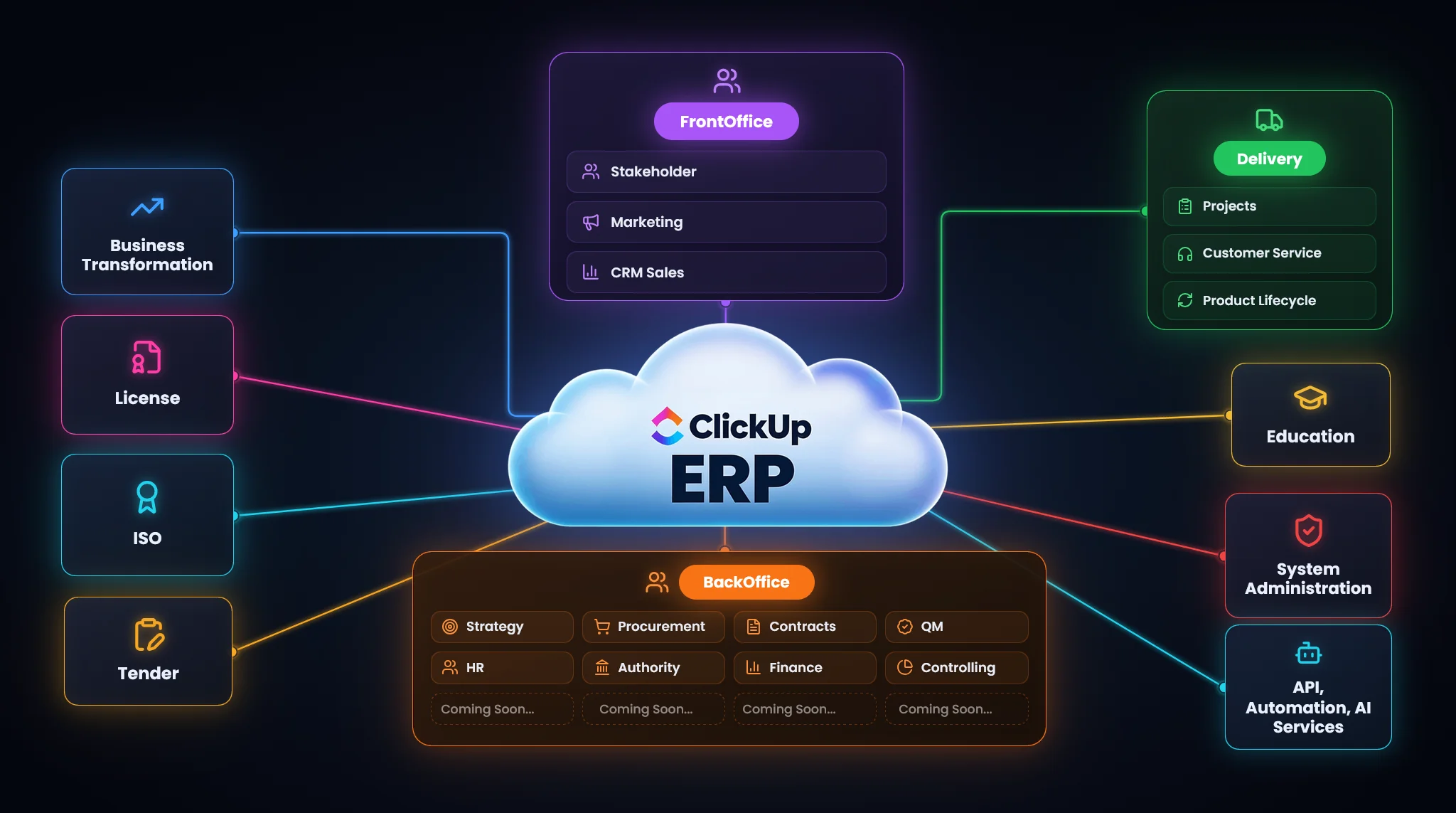
Our services..

…turn ClickUp into a unified, measurable, and scalable business management platform that connects people, processes, data, and decisions.

Business Relationship Management Module
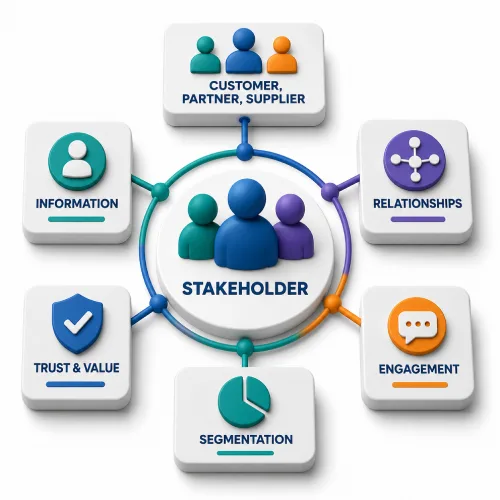
The ClickUp-based Business Relationship Management Module serves as the foundation for CRM and SRM functions. It enables the transparent management of stakeholders connected to the company who influence its operations, revenues, procurement activities, or service delivery.

Marketing Module

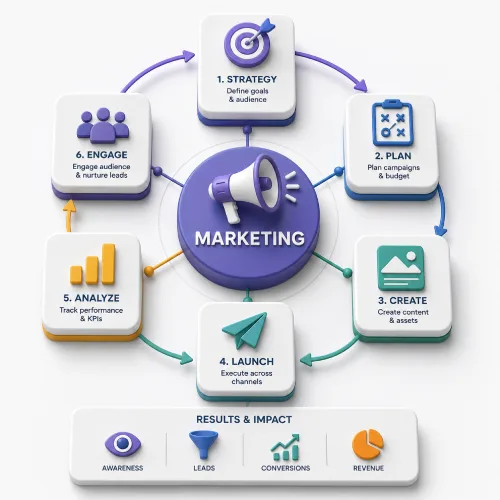
The Marketing Module built in ClickUp enables users to plan, organise, track, and transparently measure the company’s marketing activities in one place. The module helps transform marketing into a transparent, responsibility-based, and results-oriented operation.

CRM Sales Module

The CRM Sales Module transforms customer relationships into concrete sales processes, quotations, and business opportunities. This enables the company to see not only who its key market stakeholders are, but also which sales activities, quotations, decision points, and expected revenues are associated with them.

Project Management Module

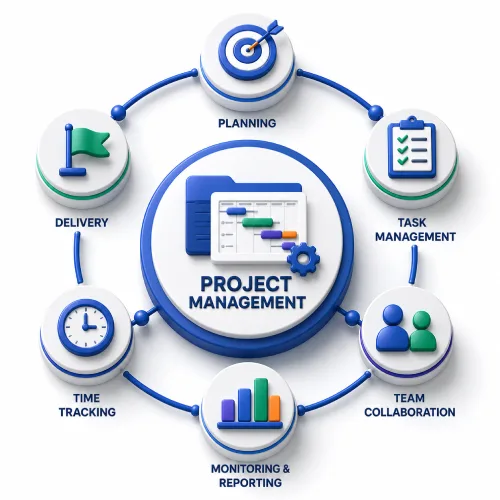
ClickUp’s best-known solution is the Project Management Module. It enables companies to plan, manage, track, and measure their projects in one place, from the initial requirement through implementation to final completion.

Customer Service Module

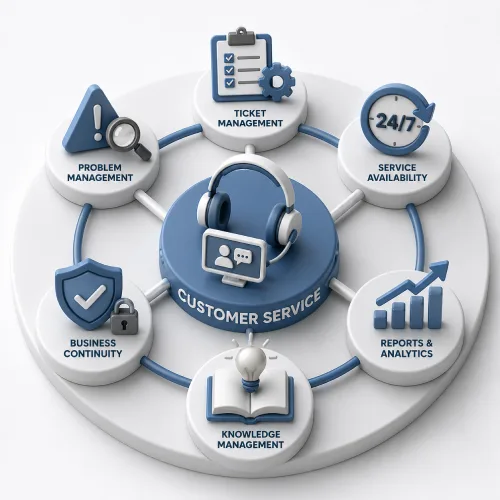
The Customer Service Module enables companies to manage customer enquiries, incident reports, support requests, change requests, and service tasks within a centralised system. This makes customer service transparent and measurable as an integral part of the company’s overall operations.

Product Lifecycle Module

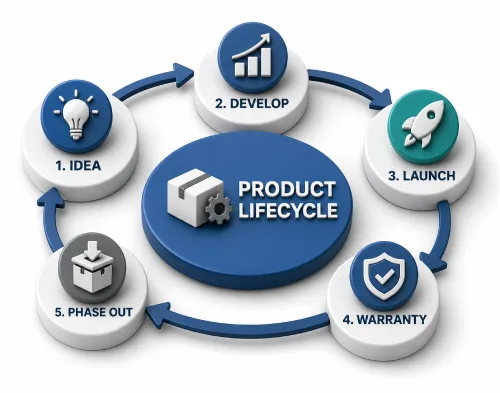
The Product Lifecycle Module manages the entire lifecycle of products and services, from sales through operation and support to phase-out. It provides a centralised view of the product’s business value, development status, market performance, customer feedback, cost structure, and operational risks.

Contracts Module

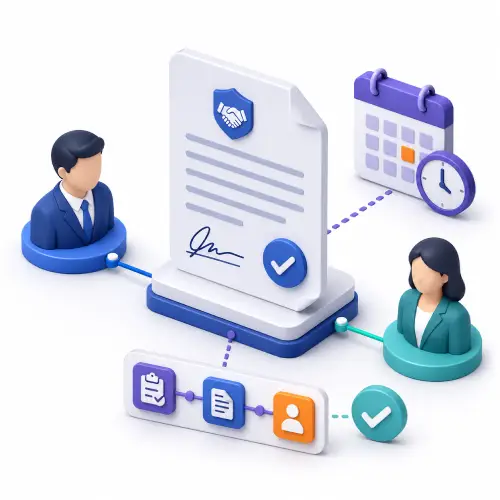
The Contracts Module makes contracts associated with all of the company’s business stakeholders transparent, searchable, and traceable. This links each contract to the relevant stakeholders, deadlines, financial terms, performance obligations, and operational tasks.

Procurement Module

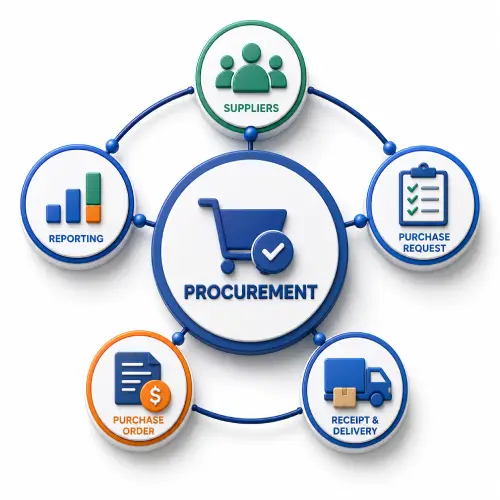
Built on the database of relevant stakeholders, the Procurement Module provides transparency into procurement requests, requests for quotation, purchase orders, and approvals associated with suppliers. It enables the company to manage procurement through a traceable, measurable, and controlled process.

HR Module

Modern HR operations become truly effective when the entire employee lifecycle is managed within a well-structured, access-controlled ClickUp system. It provides transparency across recruitment, onboarding, employee records, performance evaluation, compensation, leave management, training, the skills matrix, and organisational operations.

Finance Module

Financial operations become truly manageable when financial data is available as up-to-date business information within a Finance Module. The module makes financial processes transparent, supports cash flow planning, and connects financial data with the relevant business functions.

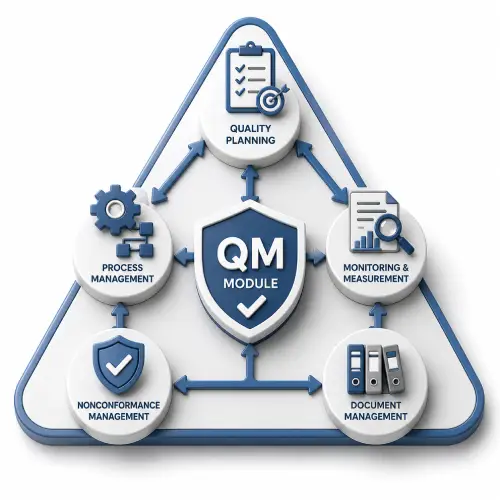
Quality Management Module

The Quality Management (QM) Module helps companies ensure that quality is not treated as a retrospective control activity, but as a measurable and continuously improvable system of business processes embedded in daily operations. This results in more transparent processes, fewer recurring errors, higher customer satisfaction, and better-informed management decisions.

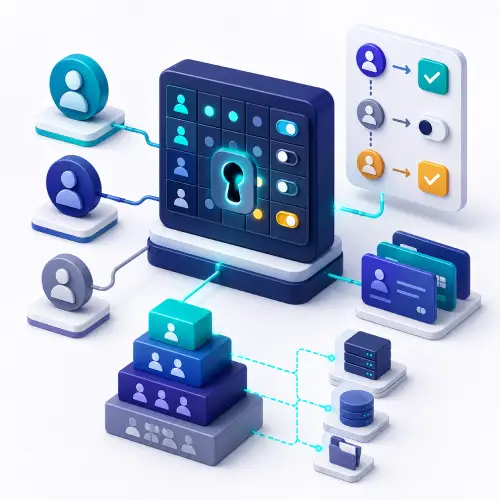
Access Rights Management Module

The Access Rights Management Module provides a transparent framework for managing who may access which systems, data, processes, or organisational areas within the company, when they may access them, and with what level of authorisation. It supports compliance with ISO 27001 and NIS2 requirements, resulting in greater data security, more controlled operations, clearer accountability, and fewer access-related risks.

Business Strategy Module

The Business Strategy Module organises the company’s long-term objectives, priorities, strategic initiatives, and performance indicators within a transparent management system. It connects strategic goals with operational tasks while bringing together daily operations, project progress, financial data, and operational performance.

Controlling Module

A company can only be managed effectively when management sees not only data from individual business areas, but also a comprehensive view of the relationships between strategic objectives, financial results, cost centres, projects, procurement activities, capacities, and operational performance. The Controlling Module supports this company-wide perspective by transforming data from different business modules into a measurable, management-level information system that supports informed decision-making.

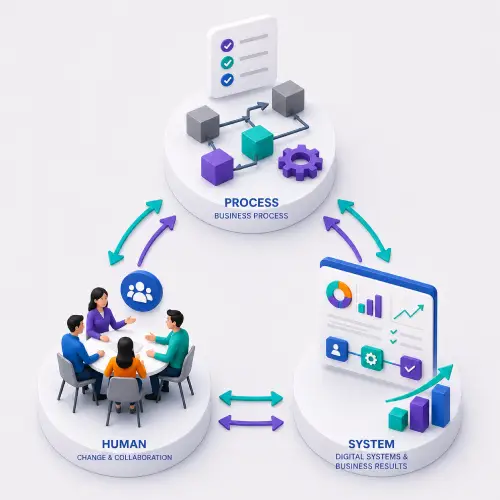
Business Transformation Services

Our Business Transformation Services enable company operations to evolve into a more structured, transparent, and strategically manageable model by aligning processes, organisational responsibilities, technological solutions, and management expectations.

They connect process development, the design of a ClickUp-based business management system, change management, and the human side of organisational operations, ensuring that digitalisation is implemented not merely as a system introduction, but as a development initiative that creates measurable business value.

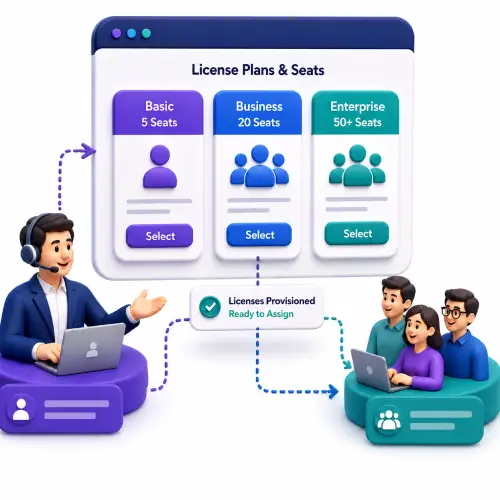
Licensing Services

Purchasing a ClickUp licence creates real business value when it is treated not merely as a subscription, but as a decision aligned with the company’s operations, access rights structure, automation requirements, and growth objectives.

The right licence structure enables the customer to use the required functions, reports, AI capabilities, integrations, and expansion options in a cost-effective, secure, and scalable way over the long term.

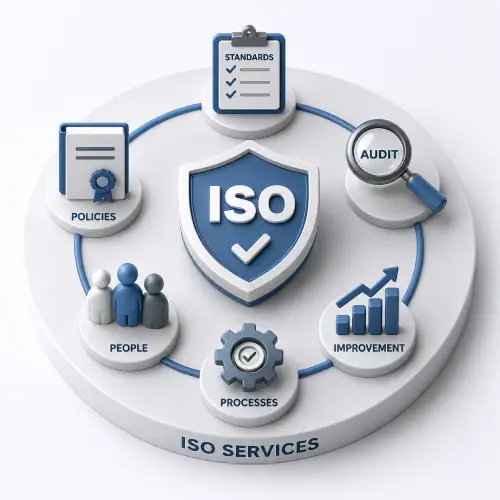
ISO Implementation Services

Aligning a ClickUp ERP implementation with ISO 9001 or ISO 27001 projects makes it possible to bring digitalisation, process development, regulatory compliance, and auditability into a unified development direction.

As a result, our customers do not receive separate technology and compliance projects, but can build a more integrated, measurable, and sustainable business operating system for the long term.

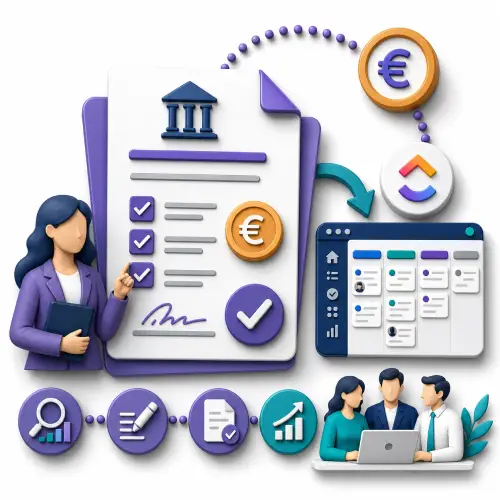
Grant Services

Under suitable conditions, the implementation of a ClickUp ERP system can be aligned with GINOP- or DIMOP-type digitalisation grants, allowing technological development, process improvement, and financing preparation to be carried out in a coordinated manner.

With the involvement of an experienced grant-writing specialist, we help ensure that the development objective, technical scope, cost structure, and business justification are well-founded from a grant application perspective, while the customer gains more transparent operations, improved management reporting, and a more scalable business management foundation.

Training and Documentation Services

Our ClickUp Training and Documentation Services are designed to help users work confidently with the system in line with their specific roles and business processes.

General and solution-specific training, business module training, and role-based user guides and process guides together support faster implementation, stronger user adoption, and more sustainable daily operations.

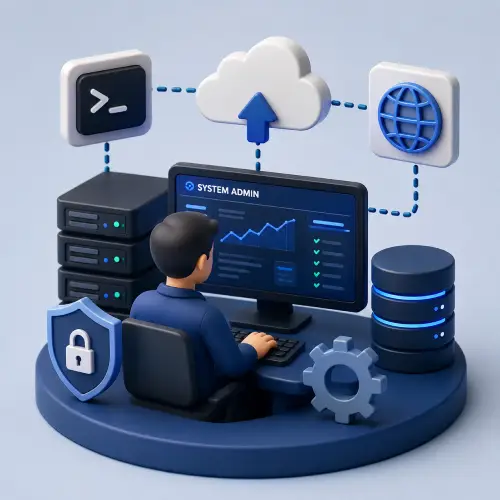
System Administration Services

The long-term value of ClickUp-based business solutions depends not only on well-designed processes, but also on their stable, secure, and documented operation. Our System Administration Services provide the professional background required for this by supervising APIs, automations, jobs, backup processes, and technical documentation, ensuring that the system supports the customer as a reliable business management platform.

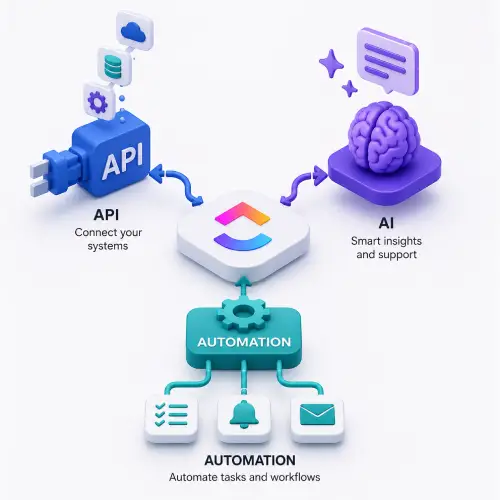
API, Automation, and AI Solutions

API, automation, and ClickUp AI solutions enable ClickUp to support daily operations not as a standalone system, but as an intelligent business management platform connected to other business applications.

They help reduce manual administration, accelerate data flow, improve data quality, and provide more effective support for different business functions.

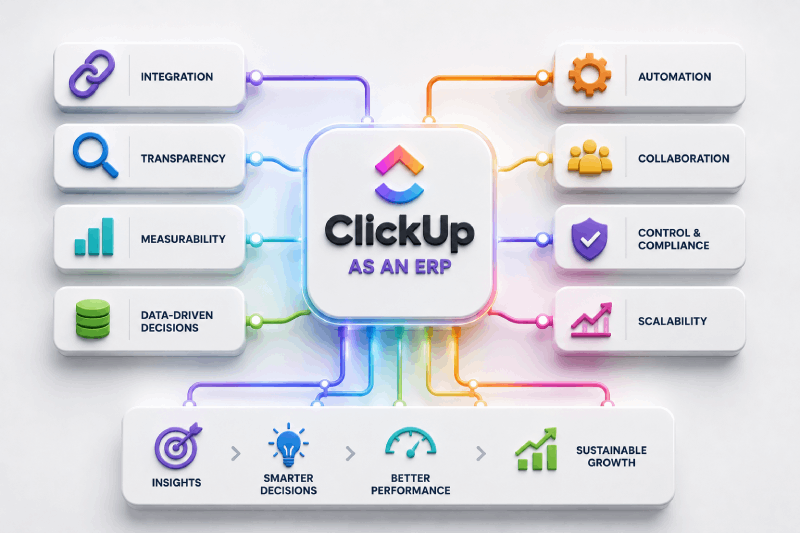
ClickUp as an ERP covers the company’s entire business processes end to end.

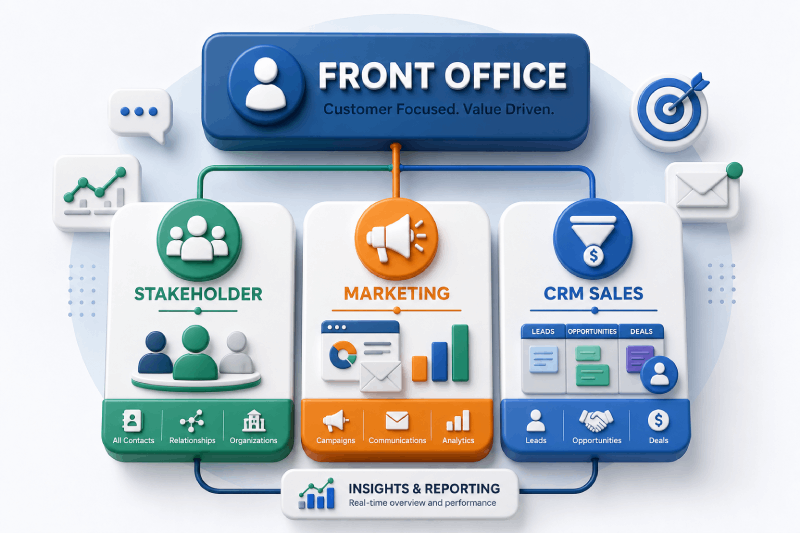
The FrontOffice Module Group helps bring together everything that forms the foundation of market presence, customer acquisition, and sales growth within a unified system.

It enables the company to manage relationship data, marketing activities, and sales processes more transparently, allowing it to build customer relationships more deliberately and plan revenue opportunities more predictably.

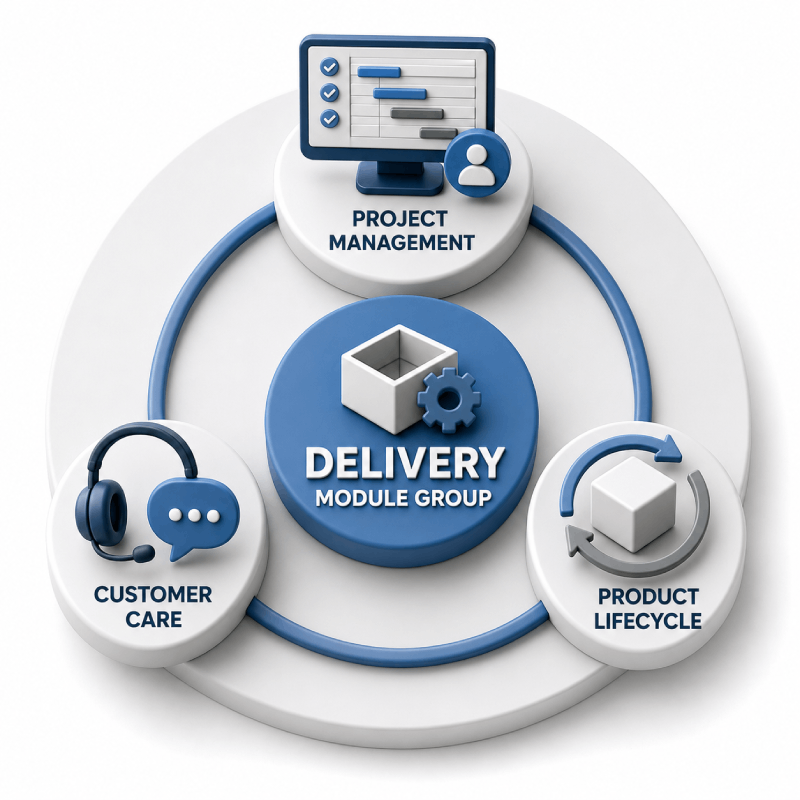
The Delivery Module Group shows how customer requirements, contractual commitments, and development decisions are transformed into completed projects, services, and business results.

It enables the company to coordinate planning, execution, customer service, and feedback within a shared ClickUp-based operational environment, resulting in more controlled delivery, faster response times, and more reliable service quality.

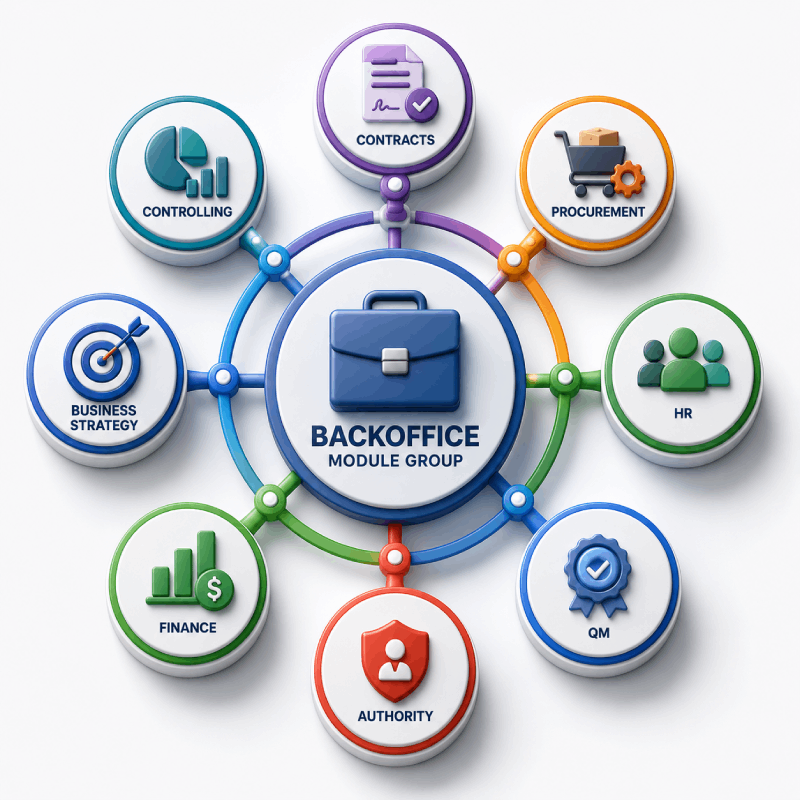
The BackOffice Module Group forms the operational backbone of the company. It provides the human resources, financial, procurement, contractual, quality management, and access control foundations on which customer relationship, delivery, and service functions can operate securely.

Its purpose is to ensure that the internal conditions required for business growth do not appear as fragmented administrative activities, but support daily operations through a well-organised, transparent, and interconnected operational framework. HR ensures the availability of the right employees and competencies, Finance makes revenues, costs, and cash flow traceable, Procurement provides the necessary resources, Contract Management controls commitments, while Quality Management strengthens reliable operations.

The value of the module group lies in making everything behind successful sales, accurate delivery, high-quality customer service, and informed management decisions visible and manageable. As a result, back-office functions are no longer seen merely as cost centres or administrative burdens, but as a strategic operational platform that enables faster decisions, lower risks, more efficient resource utilisation, and more stable business growth.

ClickUp as an ERP

Solution to Business Challenges

  • Establishing integrated business management
  • Automated and controlled business processes
  • Data-driven management decision support

The ClickUp-based ERP system enables businesses to operate within a unified, transparent, and modularly expandable business management platform instead of using separate spreadsheets, emails, and isolated software solutions. ClickUp connects customer relationships, delivery, back-office support, financial control, and management decision support.

The system is built on three interconnected module groups: FrontOffice supports customer acquisition and sales, Delivery ensures the management of projects, services, and product lifecycles, while BackOffice makes the company’s operations transparent, measurable, and controllable.

The modules operate as a unified system: a sales opportunity can initiate a project, which can generate delivery and the basis for invoicing, while finance, controlling, contracts, access rights, and quality assurance also form part of the same process. As a result, the company manages complete business processes rather than isolated tasks.

ClickUp as an ERP covers the company’s entire business processes end to end. The result is a flexible, scalable, and business-oriented ERP platform that supports company growth, transparent operations, and well-founded management decisions.

FrontOffice Module Group

Solution to Business Challenges:

  • Increasing customer acquisition and business opportunities
  • Transparent customer, partner, and supplier relationship processes
  • Better utilization of revenue-generating opportunities
  • The FrontOffice module group is one of the key drivers of business growth: it brings market relationships, customer needs, communication activities, and sales opportunities together in a unified system.
  • It gives the company a clearer view of who its most important customers and partners are, which enquiries can develop into business opportunities, which campaigns best support sales, and where management or sales attention should be focused.
  • The true value of the module group lies in connecting relationship data, marketing activities, and sales processes, enabling more predictable customer acquisition, more deliberate customer management, and better-planned revenue growth.

Solution to Business Challenges:

  • Establishing unified customer, supplier, and partner relationships
  • Predictable customer acquisition and sales
  • Transparent management of the entire customer relationship lifecycle
  • The company’s external relationships can be managed within a central, structured Business Relationship Management Module.
  • The CRM side focuses on customers, leads, quotations, and sales opportunities, while the SRM side provides transparency across suppliers, partners, subcontractors, and procurement relationships.
  • For every stakeholder, the system shows the role they fulfil, their relationship with the company, and which Sales activities,Contracts, or Supplier-related tasks are linked to them.
  • Managers gain a clear overview of which customers, suppliers, and partners influence operations, revenue, costs, or service performance.
  • This creates a central relationship and operational database on which sales, procurement, project management, contract management, and management reporting processes can later be built securely.

Business Solutions:

  • Making marketing activities measurable
  • Structured lead management
  • Aligning marketing and sales
  • By using the Marketing Module, campaigns, enquiries, communication activities, and sales results are no longer managed separately, but are connected in a measurable way that supports business growth.
  • It provides a clear overview of which campaigns are running, what content is being created, who is responsible for each activity, the current status of the work, and the relevant deadlines. Strategy planning and social media posts are brought together within a structured process.
  • Marketing team members can collaborate more effectively with each other, as well as with Sales and other delivery departments, making it easier to convert marketing leads into sales deals.
  • The impact of completed content on the target audience, tasks delivered on time, activity by channel, and the volume of enquiries generated by marketing become transparent.

Business Solutions:

  • Making sales processes transparent
  • More accurate sales forecasting and management control
  • Integrating sales into business operations
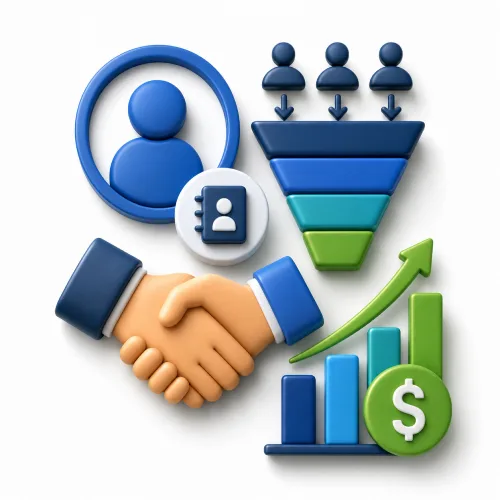
  • The CRM Sales Module makes the sales side of the Business Relationship Management Module operational and measurable, supporting revenue planning and the systematic management of customer relationships.
  • The complete sales pipeline provides a clear overview of the business potential associated with each customer and the follow-up tasks required throughout the process, from initial interest to quotation negotiations and beyond.
  • From the customer’s perspective, this results in fewer lost opportunities, faster response times, and a more structured sales approach.
  • Managers gain real-time insight into expected revenue, active quotations, the status of the sales pipeline, and the effectiveness of individual sales activities.
Delivery Department

Business Solutions:

  • Predictable and transparent resource allocation
  • Faster, higher-quality customer service
  • Connecting value-creating processes
  • The Delivery Module Group is the central pillar of the company’s delivery operations: it brings together project execution, customer service processes, and the operational management of the lifecycle of products or services.
  • It enables the company to see not only which tasks create value, but also how they are connected to customer requirements, contractual commitments, service obligations, development decisions, and internal capacities.
  • The value of the module group lies in integrating planning, execution, support, and feedback into a unified operational system, enabling more transparent project delivery, faster customer response, more deliberate product development, and more reliable service performance.

Business Solutions:

  • Creating project transparency
  • Early identification of delays and capacity issues
  • Strengthening project control and business integration
  • The Project Management Module is an essential ClickUp functionality that enables companies to manage their project portfolio in a structured way. It provides a clear overview of the current status of each workflow, the decisions required, and where delays, resource constraints, or cost risks may arise.
  • The module is closely connected to the CRM Sales process, allowing a project to be launched directly from a successful quotation or customer requirement. From the outset, the project remains linked to the customer, the quotation, and the relevant business objective.
  • When used together with the Contracts,Procurement, HR, Finance, and Controlling Modules, project-related contracts, external resources, procurement requirements, costs, revenues, and Plan–Actual variances also become transparent.
  • Capacity planning enables the company to assess in advance whether the available resources are sufficient to deliver the planned projects. This allows timely intervention to support more successful and cost-efficient project execution.

Business Solutions:

  • Centralised management of customer enquiries
  • Faster and more predictable customer service
  • Supporting continuous service improvement
  • The Customer Service Module is a service management and decision-support platform that helps companies improve service quality, increase customer satisfaction, develop service processes, and manage business operations more transparently. This business solution is built around SLA logic and can therefore be adapted to the company’s specific service model.
  • When connected to the CRM Sales Module, customer data and interaction history can be tracked in one system; through the Contracts Module, contractual commitments and SLAs can be managed; and through the Project Management Module, larger development or change requests can also be monitored within the same integrated environment.
  • When used together with the Finance and Controlling Modules, service performance, billable work, capacity utilisation, response times, resolution times, the distribution of case types, and the cost side of customer service all become measurable.

Business Solutions:

  • Transparent product management and tracking
  • Integrating market performance and operational feedback
  • Integrated management of the entire lifecycle
  • The Product Lifecycle Module is designed to make the entire lifecycle of the company’s products or services manageable from both a business and operational perspective—from market launch through active sales, operation, and support to phase-out. Lifecycle statuses, versions, documentation, operational records, warranty information, and business evaluation criteria can be recorded consistently for every portfolio item.
  • Integration with the Sales and Marketing Modules enables the company to measure the market performance of its products, including related campaigns, enquiries, quotations, won deals, revenue opportunities, and sales feedback.
  • When connected to the Project and Customer Service Modules, the Product Lifecycle Module also provides feedback from the delivery side. Quality issues, complaints, warranty cases, support requests, and development suggestions arising during operations become visible.
  • Together with the Procurement, Contracts, and Finance Modules, product lifecycle management becomes a company-wide management tool. The results of development projects, supplier dependencies, contractual obligations, costs, revenues, margins, Plan–Actual variances, and portfolio-level decision risks can all be analysed.
BackOffice Module Group

Business Solutions:

  • Greater operational control and resource efficiency
  • Integrated management of back-office processes
  • Supporting sustainable business growth
  • The BackOffice Module Group forms the operational backbone of the company. It provides the human resources, financial, procurement, contractual, quality management, and access control foundations on which customer relationship, delivery, and service functions can operate securely.
  • Its purpose is to ensure that the internal conditions required for business growth do not appear as fragmented administrative activities, but support daily operations through a well-organised, transparent, and interconnected operational framework. HR ensures the availability of the right employees and competencies, Finance makes revenues, costs, and cash flow traceable, Procurement provides the necessary resources, Contract Management controls commitments, while Quality Management strengthens reliable operations.
  • The value of the module group lies in making everything behind successful sales, accurate delivery, high-quality customer service, and informed management decisions visible and manageable. As a result, back-office functions are no longer seen merely as cost centres or administrative burdens, but as a strategic operational platform that enables faster decisions, lower risks, more efficient resource utilisation, and more stable business growth.

Business Solutions:

  • Transparent management of the employee lifecycle
  • Effective management of competencies and human resources
  • Structured HR processes and management control
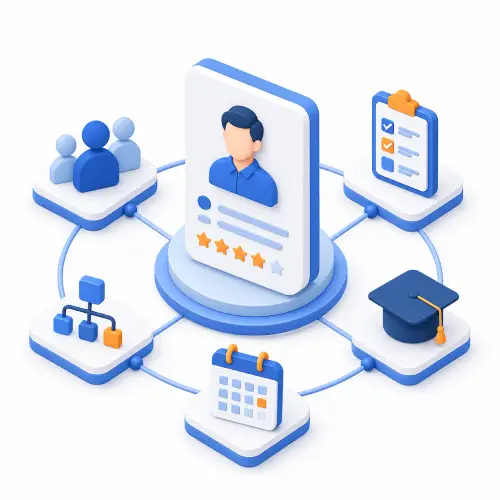
  • The HR Module covers the entire employee lifecycle, from candidate management and onboarding to employee documentation, performance evaluation, compensation, leave management, training and development, and offboarding. It supports both administrative accuracy and management transparency.
  • The organisational structure and personnel records provide visibility into available competencies, knowledge gaps, capacity risks, and development needs.
  • Working time balance management enables the company to transparently track planned and actual working hours, overtime, leave, absences, and capacity variances. This provides a more accurate view of available resources, workload peaks, payroll costs, and the reliability of workforce planning.
  • When connected to the Contracts Module, employment contracts, subcontractor agreements, probationary periods, amendments, expiry dates, and approval points can be monitored in a controlled manner.
  • When integrated with the Finance Module, payroll costs, compensation components, external resources, training expenses, and planned versus actual HR costs can be analysed more effectively.

Business Solutions:

  • Creating financial transparency
  • Strengthening planning and financial control
  • Integrated financial processes
  • The Finance Module enables the separate management of customer and supplier invoices, planned revenues, expected expenses, payment statuses, overdue items, partial payments, responsible persons, and related documents.
  • Cash flow planning allows the company to forecast when revenues and expenses are expected, where liquidity risks may arise, and which receivables or liabilities require management intervention.
  • When connected to the CRM Sales Module, expected revenues from quotations, won deals, and customer relationships can be tracked, while integration with the Procurement Module provides visibility into expenses arising from purchase orders, supplier obligations, and supplier invoices.
  • By linking it with the Contracts Module, the financial impact of contractual fees, payment terms, renewals, and obligations becomes directly transparent.
  • Integration with the HR and Customer Service Modules enables more accurate tracking of payroll-related expenses and other internal operating costs.

Business Solutions:

  • Transparent and measurable procurement processes
  • Controlling costs and supplier performance
  • Faster and more structured procurement decisions
  • The Procurement Module integrates strategic and operational business procurement processes, making them transparent, traceable, and measurable. The strategic side is linked to the Contracts Module, while the module as a whole is built on the Business Relationship Management Module, enabling procurement requests, requests for quotation, purchase orders, and supplier communications to be connected to the relevant supplier.
  • On the strategic procurement side, the system supports supplier portfolio analysis, greater transparency of cost structures, and the preparation of long-term procurement decisions.
  • In operational procurement, daily requirements, approvals, deadlines, responsible persons, documents, and expected or actual costs can be tracked.
  • Using KPIs, the module makes procurement lead times, approval times, supplier performance, on-time delivery, cost variances, and order volumes measurable.
  • Overall, the Procurement Module serves as a decision-support platform for controlling costs, developing supplier relationships, and establishing more deliberate procurement operations.

Business Solutions:

  • Transparent and centralised management of standardised contracts
  • Control of deadlines, obligations, and risks
  • Faster contract management and improved decision support
  • The Contracts Module, working closely with the Business Relationship Management Module, maintains the company’s customer, partner, supplier, and employee contracts in a centralised, transparent system that can be managed on a daily basis.
  • Contracts can be linked to business stakeholders, orders, related agreements, service activities, and incoming and outgoing invoices.
  • Contract statuses, validity periods, renewal dates, notice periods, approval steps, related documents, and responsible persons can all be tracked. This enables more effective management of obligations, risks, responsibilities, and business decisions.
  • The Contracts Module makes contract management activities measurable through indicators such as renewal rates, approval lead times, contract values, risk classifications, and contract amendments completed on time. For business stakeholders, this means faster access to information, improved compliance, and greater operational security.
  • Based on these contracts, transparent cash flow forecasts can be prepared in the Finance Module.

Business Solutions:

  • Establishing unified and standardised operations and processes
  • Preventing and managing quality issues
  • Preparing for audits and compliance with standards
  • The Quality Management Module supports the planning, standardisation, monitoring, and continuous improvement of processes, ensuring that the company operates on the basis of traceable rules, clearly defined responsibilities, and measurable quality requirements.
  • This enables proactive error prevention, as recurring problems, deviations, complaints, internal audit findings, and improvement proposals are no longer handled in isolation, but are transformed into structured quality information that can be systematically processed.
  • When connected to the Customer Service Module, customer complaints and support cases can be tracked; through the Product Lifecycle Module, product- and service-quality feedback becomes visible; and via the Project Management Module, development and corrective actions can also be monitored.
  • When used together with the Procurement, Contracts, HR, Finance, and Controlling Modules, supplier quality, contractual compliance, employee training needs, cost of poor quality, and the development of quality-related KPIs can all be analysed.
  • As a result, the Quality Management Module is not merely a documentation or audit-preparation tool, but a management platform that supports customer satisfaction, continuous improvement, the reduction of operational risks, and business-oriented quality control.

Business Solutions:

  • Transparent access request and management processes
  • Supporting onboarding, role-change, and offboarding processes
  • Clarifying responsibilities and decision-making authority
  • The Access Rights Management Module ensures that only the appropriate individuals can access the company’s information, processes, and business functions, at the right time and with the appropriate level of authorisation. The module supports the entire access rights lifecycle, from requests and approvals through modifications and periodic reviews to expiration or revocation.
  • The system manages access requests, multi-level approval processes, role-based access, temporary permissions, validity periods, and automatic expirations. It also supports the onboarding of new employees through the HR Module, the management of role changes, offboarding processes, and regular access reviews.
  • The module provides comprehensive administration of users, roles, organisational units, systems, applications, and access rights. Logged changes, approvals, and auditable events support compliance with ISO 27001, NIS2, and other internal or external regulatory requirements.

Business Solutions:

  • Transparent management of strategic objectives
  • Tracking business planning and implementation
  • Strengthening management decision support
  • The Business Strategy Module acts as a central management platform that helps clarify priorities, prepare strategic decisions, evaluate Plan–Actual variances, and support more deliberate business growth. It connects management-level thinking with operational execution, making it visible which projects, products, customer relationship activities, procurement initiatives, or organisational developments directly contribute to corporate objectives.
  • Information from the CRM Sales, Marketing, and Business Relationship Management Modules reveals market opportunities and revenue potential, while the Project Management, Product Lifecycle, and Customer Service Modules provide strategic feedback on execution, service performance, and customer experience.
  • Together with the Finance, Procurement, HR, Contracts, and Quality Management Modules, management can review not only the objectives themselves, but also the resource, cost, contractual, quality, security, and organisational conditions required to achieve them.
  • The Business Strategy Module serves as a central management platform that helps clarify priorities, prepare strategic decisions, evaluate Plan–Actual variances, and support more deliberate business growth.

Business Solutions:

  • Transparent measurement of company performance
  • Early identification of Plan–Actual variances and risks
  • More efficient use of resources
  • The Controlling Module is a company-wide performance management system that helps management control costs, identify risks at an early stage, allocate resources more effectively, and implement strategic objectives more consistently.
  • Business Strategy Controlling supports the monitoring of objectives, KPIs, strategic initiatives, priorities, and Plan–Actual variances, enabling management to assess how closely the company’s operations align with its defined business direction.
  • Financial Controlling supports more accurate liquidity, profitability, and cost management by analysing revenues, costs, cash flow, margins, receivables, liabilities, performance indicators, and cost centres.
  • Project Controlling enables the monitoring of deadlines, expenditures, capacity utilisation, cost variances, milestones, and delivery risks, while Procurement Controlling makes supplier performance, procurement volumes, cost savings, and supplier risks measurable.
  • The module is closely connected to the Finance, Project Management, Procurement, CRM Sales, HR, Customer Service, Product Lifecycle, Contracts, and Business Strategy Modules, as these provide the data foundation for controlling reports, dashboards, and management analyses that support measurement-based business decisions.
Business Transformation Services

Business Solutions:

  • Reducing organisational, departmental, and process isolation by aligning these entities
  • Accelerating organisational acceptance of new ways of working
  • Aligning human factors with management practices

The Business Transformation Service is a coordinated change process that aligns the organisation, business processes, technology, and people around a common direction. It can create more stable operations, stronger collaboration, clearer responsibilities, faster decision-making, and a more scalable foundation for long-term business growth.

One of the most important success factors of transformation is change management: designed processes and systems only create value when employees understand, accept, and integrate them into their daily work. Particular attention is given to aligning the human factor, strengthening management commitment, addressing resistance, establishing new working practices, and supporting organisational learning.

We help ensure that, alongside technological and process improvements, organisational culture, communication, cooperation, and management practices are aligned with the new business objectives. This is particularly important where the implementation of a new ERP system also requires a change in operational mindset.

Licensing Services

Business Solutions:

  • Creating a cost-efficient licence structure
  • Aligning functionalities with business requirements
  • Ensuring scalable ClickUp operations

Several ClickUp licence plans, access levels, add-on services, and automation options are available. Selecting the right ClickUp licence is one of the key foundations of the entire ClickUp-based operating model. It determines which functionalities, automations, reporting capabilities, AI add-ons, integrations, and expansion options the company can use effectively in its daily operations.

It is necessary to determine which ClickUp licensing solution provides the right balance of functionality, control, scalability, and cost efficiency for operating the FrontOffice, Delivery, and BackOffice Module Groups.

A well-designed licence structure enables different user groups to access the functions they need while helping the company avoid unnecessary licences and operational limitations caused by future restrictions. As a result, the ClickUp Workspace can be used as a scalable, secure business management platform that also supports management decision-making over the long term.

ISO Implementation Services


Business Solutions:

  • Reducing duplicated work and costs by combining the implementation with a ClickUp-based ERP
  • Translating ISO requirements into practical business operations
  • Creating more reliable and predictable company operations

Implementing an ERP system and carrying out an ISO implementation project—whether for ISO 9001 quality management or ISO 27001 information security—are both major undertakings in their own right, but they are closely connected. Both are built on processes, responsibilities, documented operations, control points, risk management, measurable performance, and the alignment of these elements.

The advantage of a coordinated implementation is that duplicated work can be avoided. Process descriptions, access rights, approvals, documentation, KPIs, and control points can be incorporated into the business processes mapped in ClickUp in line with ISO requirements. This reduces the burden on internal resources, accelerates preparation, and significantly lowers the combined implementation cost of the two projects.

In cooperation with expert partners, we make it possible for the ClickUp ERP implementation to become more than a standalone technology project. It becomes a business development initiative that also incorporates quality management, information security, and management control considerations. As a result, a more integrated and auditable business operating system is delivered.

Grant Services

Business Solutions:

  • Increasing the likelihood of a successful grant application
  • Reducing administration and grant project risks
  • Ensuring alignment between the grant application and the services actually awarded

A ClickUp ERP system can be implemented through GINOP- or DIMOP-type digitalisation grants. In addition to support on the technology and process development side, an experienced grant-writing specialist can help ensure that the development objectives, ERP implementation scope, cost structure, and professional justification are presented in a structured and grant-compliant manner.

Digitalisation, grant preparation, and technical implementation can be delivered as a coordinated development process rather than as separate activities. This reduces the company’s own financing burden, provides a clearer development direction, creates more transparent operations, and supports more predictable long-term business growth.

Training and Documentation Services

Business Solutions:

  • Creating practical process guides
  • Enabling faster, independent system use
  • Role-based training

A ClickUp implementation creates real business value when users can work with the system confidently and according to a consistent approach. The purpose of the Training and Documentation Services is to help the customer’s teams quickly understand how ClickUp works, how the configured processes operate, and how their own business modules should be used in practice.

General ClickUp training introduces the system’s core logic and standard functions. Training for specific ClickUp solutions is based on the customer’s own system, allowing users to learn according to their customised, ClickUp-enabled business processes.

Training on business module solutions can provide a dedicated focus on the solutions and module-based processes within the FrontOffice, Delivery, and BackOffice Module Groups. As a result, users not only learn how to operate the system technically, but also understand which business objectives and responsibilities each ClickUp solution supports.

Alongside the training, user guides and process guides can be tailored to individual roles, explaining system use, daily tasks, areas of responsibility, and related business processes. Separate guides can therefore be created for managers, key users, operational users, or module owners, ensuring that each group receives knowledge relevant to its own role.

API, Automation and AI Solutions

Business Solutions:

  • Eliminating data silos
  • Reducing manual administration
  • Accelerating business processes
  • Reducing incorrect or incomplete manually entered data
  • Enabling flexible development of operations that are difficult to scale
  • Managing information overload


The API, Automation, and AI Service enables ClickUp to support daily business processes as an automated business management platform connected to other business systems. APIs can be used to establish data connections with other applications. Their main benefits are reduced manual data transfer, improved data quality, and faster information flow.

Custom solutions can also be developed, such as complex approval workflows, data connections between modules, specialised status logic, automated calculations, report preparation, or background data processing.

ClickUp’s integrated AI solutions support information processing. They can assist with summarising tasks, documents, and comment threads, reviewing project statuses, preparing field content, categorising tasks, and creating management summaries.

Across Business Relationship Management, Project Management, Customer Service, Finance, Procurement, HR, and Controlling processes, these solutions result in less manual administration, faster response times, better data quality, more transparent operations, and a more scalable ClickUp-based business management system.

System Administration Services

Business Solutions:

  • Ensuring stable and predictable system operation
  • Transparent error tracking and traceability
  • Supporting business decisions based on relational data
  • Continuous operation with significantly reduced dependency on individual employees

The System Administration Services ensure the long-term business continuity of companies by monitoring API connections, automations, background processes, data management solutions, backup solutions, and integrations.

The ClickUp-tailored solution includes the operation of APIs, supervision of integrations, logging and monitoring of background jobs, and the controlled management of synchronisations and scheduled processes.

APIs, automations, jobs, data connections, access logic, system settings, and operational processes are documented in a clear, traceable, and transferable format within the technical documentation. This simplifies troubleshooting, supports auditability, and ensures that system operation remains transparent over time.

More stable system operation, improved error tracking, more secure data management, and more predictable automations ensure system reliability and accelerate the planning phase of future projects built on these foundations.

Do you have any questions?

We welcome your enquiry. You can also book an online consultation or try the application yourself!